
IGCSE Computer Science – Data representation
About Course
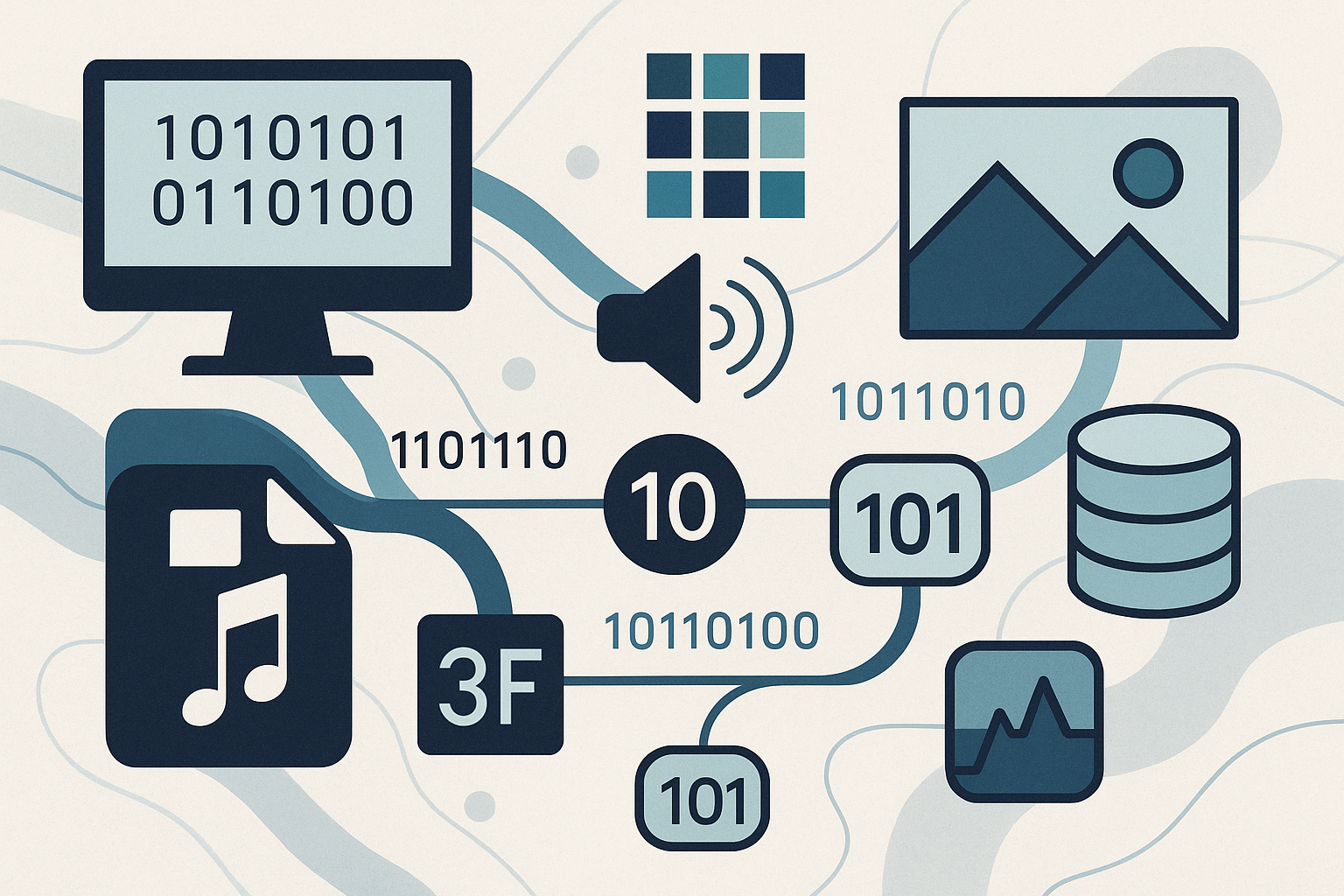
This chapter explores how computers represent, store, and process different types of data using various number systems and encoding techniques. You will learn the fundamental principles of binary, hexadecimal, and denary systems, how to convert between them, and why these systems are essential in computing.
You will also study binary operations, including:
Adding two positive 8-bit binary numbers
Understanding overflow errors in binary addition
Applying logical binary shifts
Representing positive and negative integers using two’s complement notation
In the second section, you will investigate how computers handle text, sound, and images:
How text is represented using character sets such as ASCII and Unicode
How sound is digitised using sampling rate and sample resolution
How images are represented using resolution and colour depth, and the impact of these factors on image quality and file size
The final part of the chapter focuses on data storage and compression:
How storage is measured in bits, bytes, and larger units
How to calculate file sizes for image and sound data
Why compression is necessary and how it reduces file sizes
The differences between lossy and lossless compression methods and when to use each
By the end of this chapter, you will understand not only how data is represented inside a computer but also why these methods are chosen for efficiency, accuracy, and compatibility in real-world applications.
Course Content
Number System
Number System
00:00
Text Sound Image
Data Storage and File Compression
Quiz
Student Ratings & Reviews